THE LESSON ROOM
Keep one card through the shuffle
A two-pass overhand control: send the top card to the bottom, then bring it home while the other cards mix.
WHAT YOUR AUDIENCE SEES
The effect
A returned card appears to be lost during two overhand shuffles, yet you can reveal it on top.
What you need
- An ordinary deck
- A soft table surface
Your practice goal
Complete twenty slow two-pass controls without losing the card, then match the rhythm of an ordinary shuffle.
I’m here to learn. Show me the method.
AT YOUR OWN PACE
Follow the selection through both shuffles
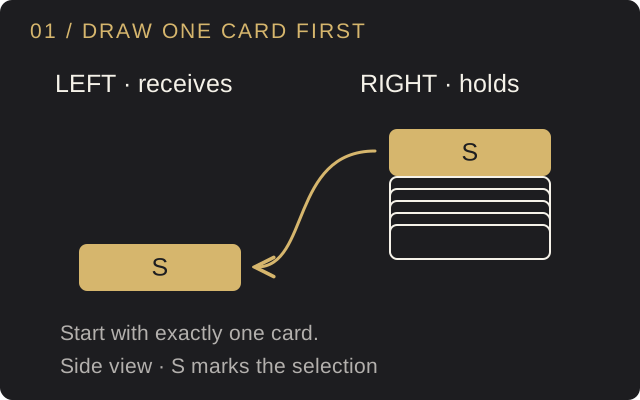
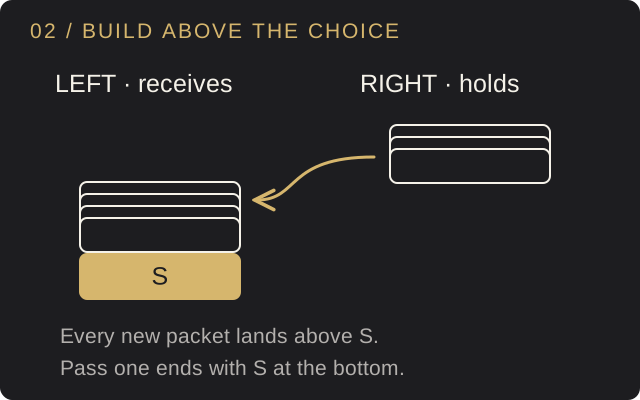
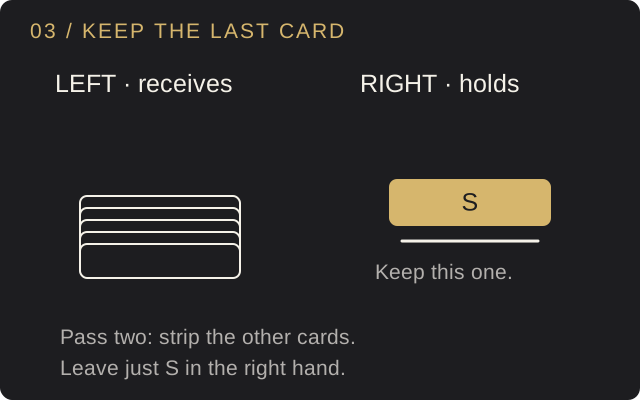
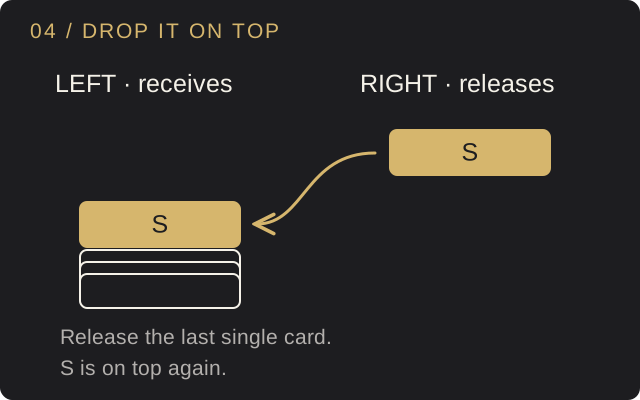
Side view of packet order. S is one selected card. Hand labels mean your own hands; reverse them if you shuffle the other way.
Each move plays once and waits. Drag the position slider to examine any moment. The still diagrams and full instructions follow below.
Prerequisite: an ordinary overhand shuffle
Hold the deck in the right hand above the open left palm. The left thumb draws small packets from the top into the left hand; each new packet lands on top of the packets already there. The remaining cards stay in the right hand. Reverse hands throughout if that is your comfortable shuffle. Practice the ordinary action before adding a control.
This is a control of one card, not a false shuffle that preserves the entire deck. Work with the faces toward the floor and do not squeeze the cards into a bow.
First pass: top to bottom
Have a card selected and remembered. Ask for it to be returned to the top of the face-down deck. Begin the overhand shuffle by drawing exactly that one top card into the left hand. Draw further small packets onto it until the right hand is empty. The selection is now at the very bottom of the left-hand packet.
Stop and check during practice. If you drew two cards first, the selection is no longer the bottom card. Slow down rather than trying to conceal an unreliable action.
Second pass: bottom to top
Take the squared deck back into the right hand. Overhand shuffle small packets into the left hand again. As the right-hand packet gets thin, reduce the size of each draw. Leave the last single bottom card in the right hand; it is the selection. Drop that final card on top of the left-hand packet to finish. The selection has returned to the top.
For the first few trials, use a face-up selection so you can see its journey. Then turn everything face down. Do not use a protruding card as a performance aid.
Give the control a purpose
Square the deck and pause. “Let’s give one card a chance to find its way back.” Ask the spectator to name their card, then turn over the top card. This is a complete short practice effect; the control can later serve other routines. Avoid repeated shuffling just to display the move.
Common mistakes
- Accidentally stripping the final card with a packet in pass two. It must remain until the end.
- A long pause before the last card. Practice drawing progressively smaller packets so the finish fits the shuffle’s rhythm.
- Claiming the spectator shuffled the deck. You performed the shuffles; describe only what happened.
- Rushing into a flourish. A quiet, ordinary shuffle is the goal.
Your checkpoint
Complete twenty correct controls at a comfortable pace. Record ten ordinary shuffles and ten controlled sequences from the audience’s angle. Compare grip, height, rhythm, and gaze—not speed alone. If the controlled sequence visibly stalls, keep it in rehearsal. For a further performance challenge, use the key-card workshop to practice separating a method from its reveal.
Original practice handling based on the traditional top-to-bottom control described in Hoffmann’s Modern Magic, “To make a False Shuffle,” First Method, pp. 23–24.
Share the effect, respect the creator, and let people choose whether to learn. Our code →